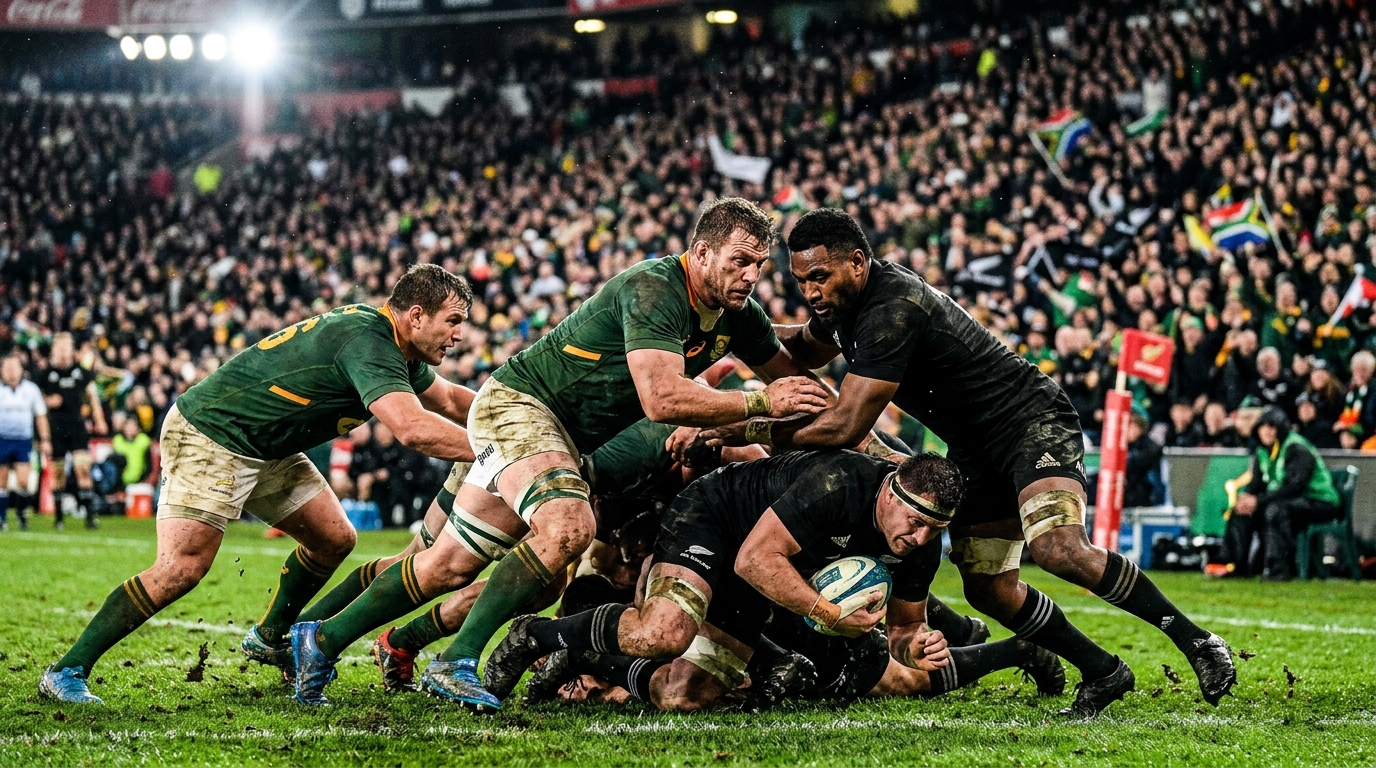
The Springboks defeated the All Blacks 29–24 on Saturday in a brutal, high-intensity Rugby Championship encounter that tested every inch of South Africa’s championship pedigree.
Rassie Erasmus’s squad relied on relentless set-piece dominance, punishing breakdown collisions, and decisive fourth-quarter bench impact to claw back from an early deficit and lock down the victory in the dying minutes.
Congratulations to the boys: when New Zealand found early space on the perimeter and put the world champions under sustained territorial pressure, South Africa did not panic. They tightened their defensive spacing, absorbed the All Blacks’ attacking waves, and systematically dismantled the contest where Test matches are won—at the scrum, in the tackle contest, and on the advantage line.
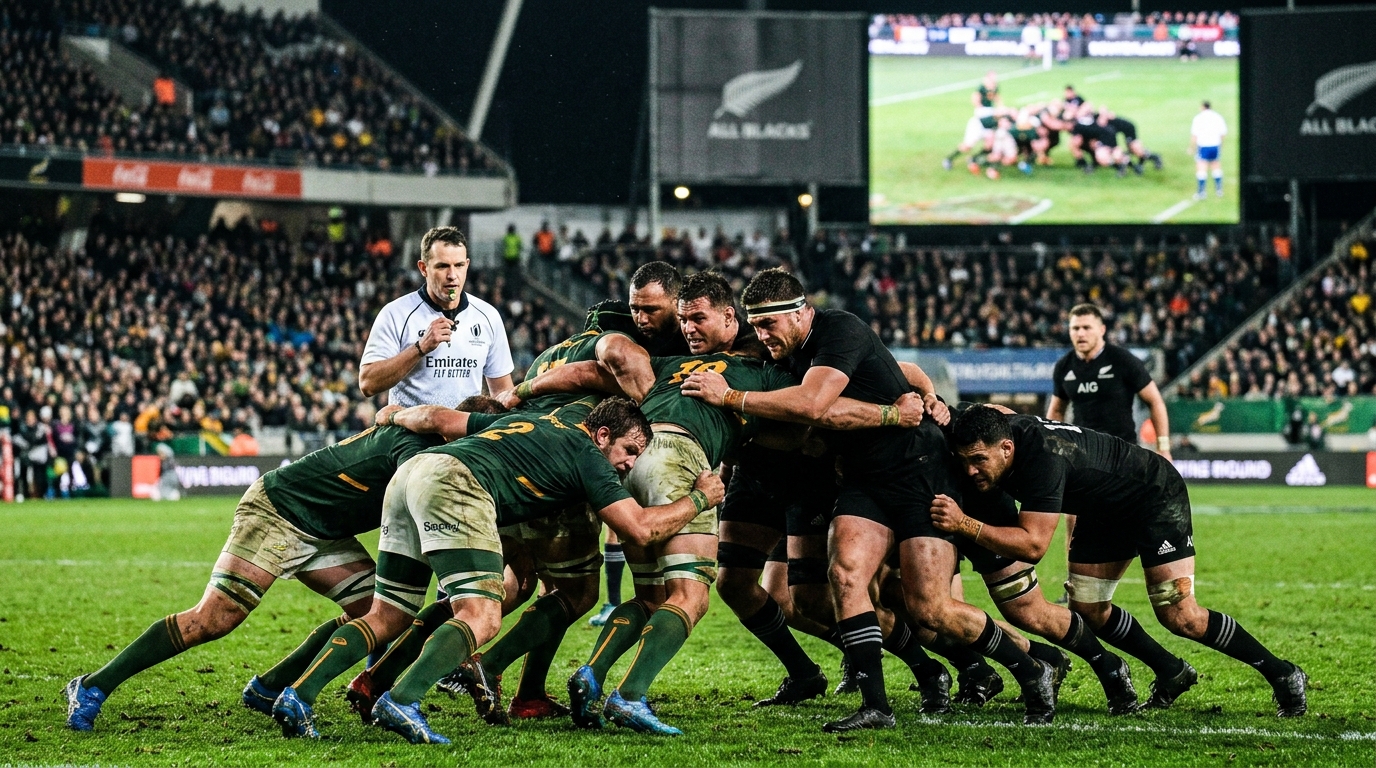
The turning point arrived midway through the second half. With the All Blacks clinging to a narrow lead and searching for a knockout blow, the Springbok bench injected immediate forward momentum. Successive scrum penalties deep in New Zealand territory forced defensive compromises, sapping the visitors of their exit options and swinging momentum irrevocably toward the green and gold.
Caps do not clean a ruck on reputation alone, and Saturday required unsparing work rate. The loose trio contested every breakdown ball, denying the All Blacks the rapid phase play that characterizes their best attacking rugby. When the decisive turnover arrived in the 76th minute, the defensive line held firm, suffocating New Zealand’s final counter-attack to seal a five-point victory.
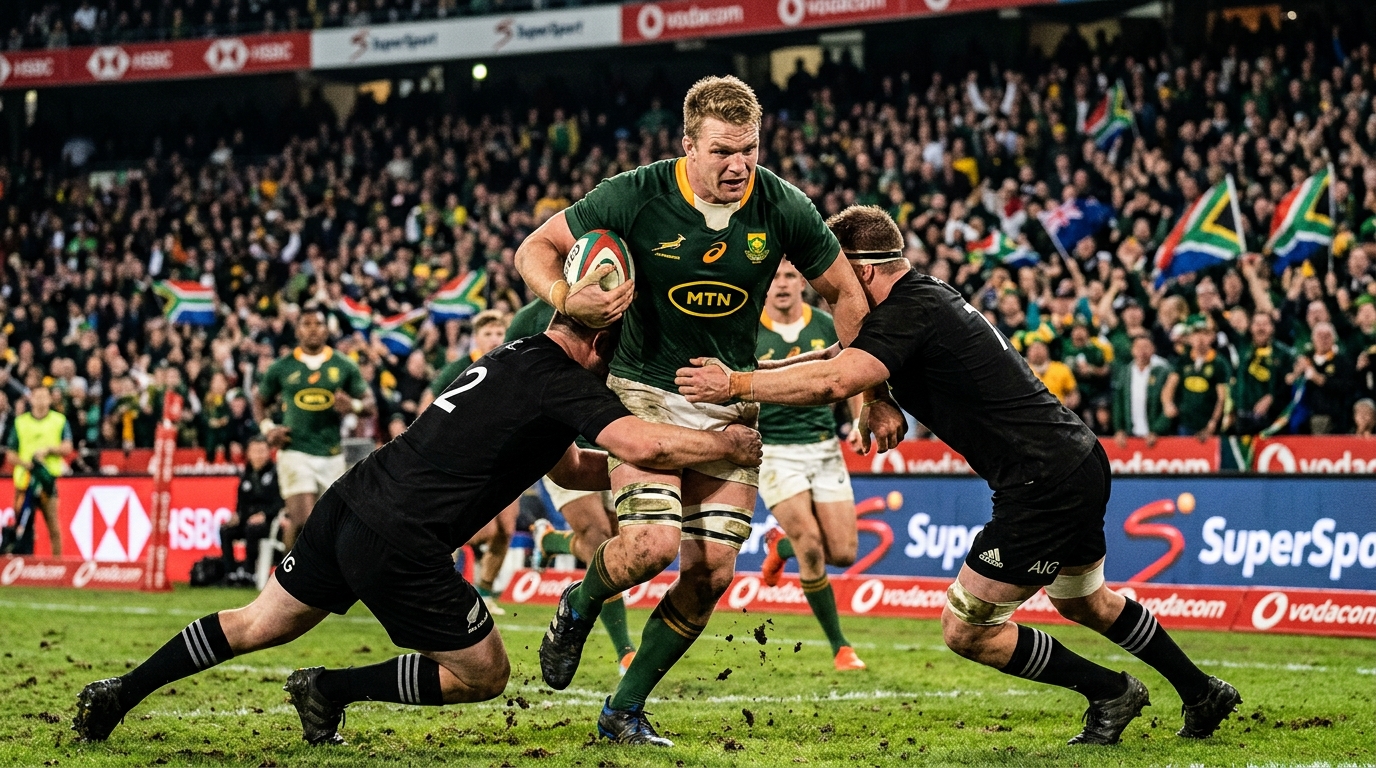
In elite Test rugby, bench depth is not an injury reserve; it is an offensive deployment system. The Springbok Bomb Squad strategy functions by introducing fresh, starting-calibre tight-five forwards into the final 25 minutes, forcing tired opposition front rows into technical scrum collapses and conceding territory through discipline penalties under extreme fatigue.
South Africa strengthens its grip on the Rugby Championship table while extending its psychological edge over New Zealand in tight finishes. For supporters, the victory reaffirms that even when the Boks start slowly or concede early points, the coaching structure possesses the tactical adaptability and physical power to close out world-class opposition under maximum pressure.
* How will the coaching staff rotate the squad heading into the final rounds of the southern hemisphere championship?
* Can the Springboks clean up their early handling errors and defensive reads before facing northern hemisphere touring opposition?
* What tactical adjustments will New Zealand make after failing to withstand South Africa’s late forward onslaught for the second consecutive week?