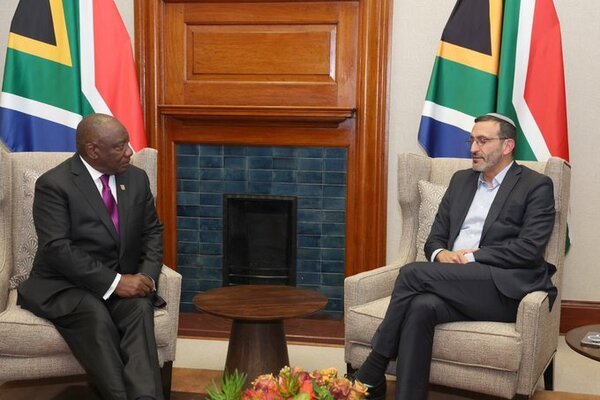
The Presidency confirmed that the meeting took place following quiet, multi-channel diplomatic interventions by Pretoria aimed at facilitating the release of Perez’s remains from Hamas custody. Perez, who was born and raised in Johannesburg before emigrating to Israel, was killed on October 7, 2023, while serving as a 22-year-old IDF tank commander.
While the Perez family publicly expressed deep gratitude toward Ramaphosa for his personal empathy and direct intervention, the meeting has drawn sharp criticism from political allies and civil society groups. Opponents argue that extending high-level executive recognition to the family of an active IDF soldier creates a stark contradiction with South Africa’s high-profile legal challenge against Israel at the International Court of Justice (ICJ) in The Hague.
Presidential spokesperson Vincent Magwenya firmly defended the head of state's actions, clarifying that South Africa’s constitutional mandate compels the state to assist its citizens caught in global crisis zones without political qualification.
"The South African government remains engaged in assisting all South Africans, irrespective of race or religion, who are ensnared in conflict zones," Magwenya noted, pointing to similar state interventions involving South Africans trapped in Syria, mercenaries in the Russia-Ukraine war, and the repatriation of Ukrainian children.
Consular Obligation vs. Foreign Enlistment Laws
The central conflict surrounding Ramaphosa’s meeting rests on the friction between consular protection rights and the Regulation of Foreign Military Assistance Act (RFMAA) of 1998.
Under South Africa's RFMAA, any citizen or permanent resident is strictly prohibited from joining foreign armed forces or mercenary groups without prior authorization from the National Conventional Arms Control Committee (NCACC). Engaging in foreign military combat without explicit approval is a statutory criminal offense subject to prosecution upon return.
Conversely, under international law and democratic governance, executive leaders maintain broad humanitarian discretion to protect citizens and negotiate hostage/body releases across hostile borders. By framing the intervention as a universal humanitarian duty rather than a political endorsement, the Presidency seeks to preserve the executive’s role as an impartial negotiator while managing immense domestic political fallout.
State Duty to Citizens: The executive's position reinforces that South African passport holders can request state intervention in foreign humanitarian crises, regardless of domestic political alignments.
Enforcement of Military Laws: The debate reopens intense public focus on how South African law enforcement handles citizens who actively participate in foreign military campaigns without official clearance.
Geopolitical Balancing: Demonstrates the diplomatic complexity South Africa faces as it balances its posture as a neutral regional peace mediator against its formal legal actions in global courts.
Does extending executive assistance to citizens serving in foreign militaries undermine South Africa’s legal framework against foreign enlistment?
Can South Africa effectively maintain its role as an impartial international peace mediator while pursuing adversarial litigation at the ICJ?
Have a perspective on this story? Leave your comment below and join the debate on News Definition.