
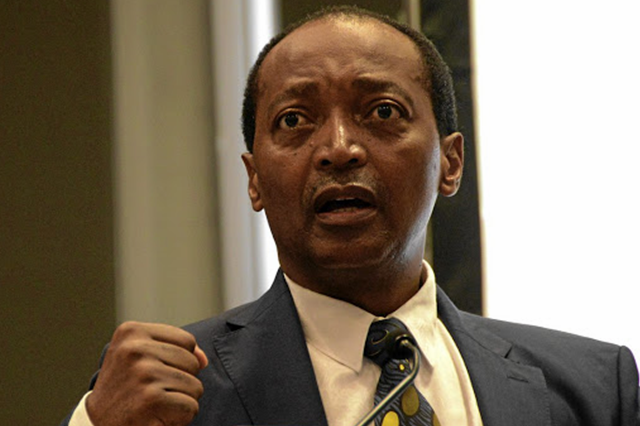
Lobbyists and informal networks behind the 'PM27' movement continue to promote billionaire mining magnate and Confederation of African Football (CAF) President Patrice Motsepe as the ideal candidate to stabilize the liberation movement. With key internal contenders like Deputy President Paul Mashatile and Secretary-General Fikile Mbalula struggling to build broad public consensus, Motsepe is framed by supporters as a clean-hands compromise capable of restoring middle-class trust and global market confidence.
Yet, despite Motsepe’s repeated attempts to distance himself from formal political office, the persistent noise surrounding his potential candidacy points to a far deeper reality within South Africa's ruling party
The Illusion of the Corporate Savior
The push for a Motsepe presidency represents a classic political phenomenon: the search for an exogenous technocratic savior during institutional decay.
When political parties face severe credibility deficits, public scandals, and electoral decline, internal factions often look outside their traditional ranks for a figure possessing independent wealth and untarnished moral standing.
However, replacing political consensus-building with corporate capital is a high-risk gamble. State craft requires ideological alignment, deep grassroots organizing, and constitutional diplomacy—qualities that private wealth and corporate success cannot automatically buy within a complex liberation movement.
WHY THE MOTSEPE TALK PERSISTS
The Trust Vacuum: Persistent corruption allegations and factional warfare have severely damaged the public profile of mainstream career politicians, driving demand for an unblemished candidate.
Economic Appeal: Proponents argue that Motsepe’s international business standing and vast personal resources would reassure foreign investors and stabilize financial sentiment.
Cross-Factional Neutrality: As an external figure, Motsepe is perceived as one of the few individuals who could bypass internal party warfare without belonging to a dominant hostile faction.
THE REALITY CHECK: WHY IT’S A FAULTY BLUEPRINT
Grassroots Resistance: The ANC’s internal voting delegates are deeply rooted in branch structures that rarely yield power to non-traditional political figures without decades of party service.
Conflict of Interest: Motsepe's vast mining and financial holdings would create unprecedented corporate conflicts of interest at the highest level of state power.
Reluctant Contender: Motsepe himself has repeatedly signaled that his priorities remain centered on private enterprise, philanthropy, and continental sports development.
Political Uncertainty: Ongoing succession speculation signals that the political landscape remains fluid, directly impacting policy continuity and economic governance.
Shifting Power Dynamics: The debate highlights how capital and public perception are increasingly challenging traditional party loyalty in Mzansi politics.
Can any corporate leader successfully transform a deeply factional political party without being consumed by its internal machinery?
Is the push for Patrice Motsepe a genuine leadership solution, or simply a sign of an ANC struggling to produce its next generation of credible leaders?
Have a perspective on this story? Leave your comment below and join the debate on News Definition.