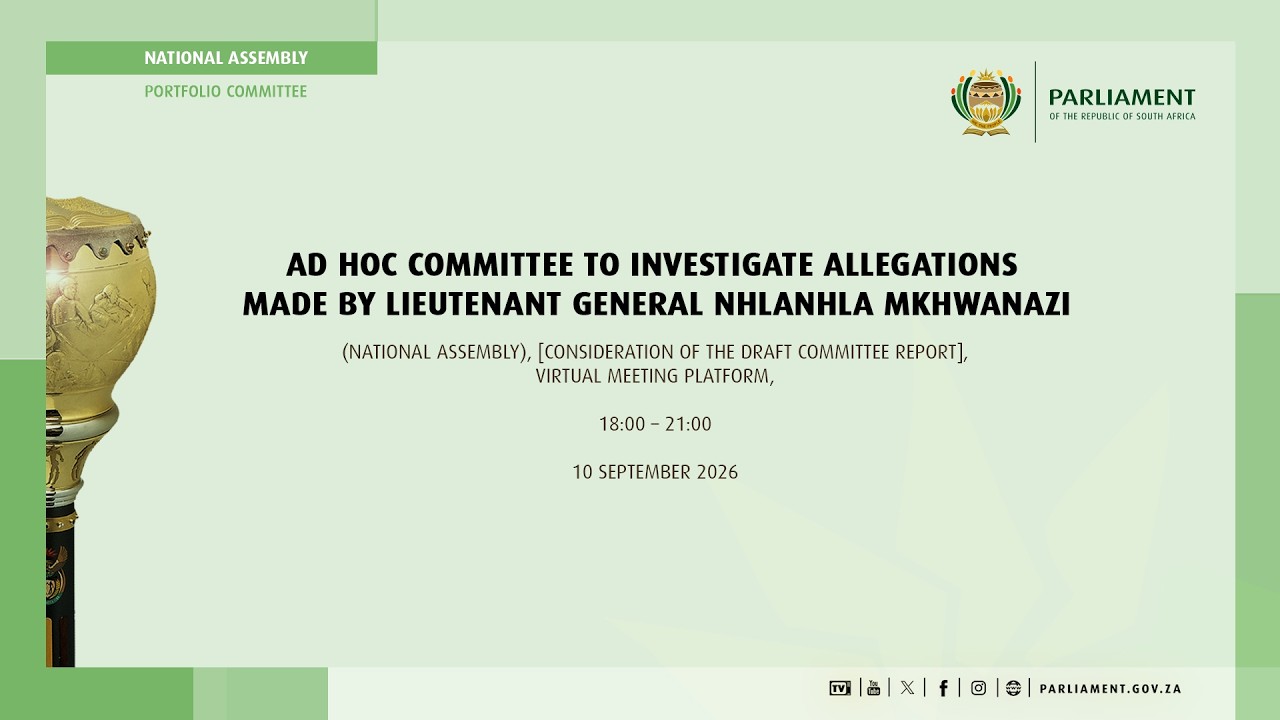
Friday marks the official calendar date that parliamentary records treat as the final reporting deadline for the ad hoc committee investigating police capture and political interference allegations.
The National Assembly established the ad hoc inquiry following explosive claims by KwaZulu-Natal Police Commissioner Lieutenant-General Nhlanhla Mkhwanazi in July 2025 regarding executive meddling in criminal dockets. After several procedural extensions, Speaker Thoko Didiza revived the committee under National Assembly Rule 253(6)(c), setting 11 September 2026 as the formal completion deadline. Draft deliberations concluded this week ahead of tabling.

Draft findings circulating among committee members indicate that lawmakers do not believe there is sufficient evidence to establish corrupt relationships involving Police Minister Senzo Mchunu. Lawmakers also noted an absence of direct electronic or documentary communication linking Mchunu to businessman Vusimuzi 'Cat' Matlala for funding political ambitions. While this finding does not constitute a judicial acquittal, it substantially weakens expectations of direct ministerial sanctions from Parliament.
Earlier committee proceedings adopted a far sharper operational stance on structural policing decisions. Members concluded that dissolving the specialised Political Killings Task Team could have advanced the motives of organised criminal syndicates and caused severe delays in prosecuting high-profile murder dockets. This dual posture leaves lawmakers balancing a cautious stance on executive accountability against serious documented damage to police operations.
Opposition parties, including the Democratic Alliance, are preparing minority reports to record institutional risk where the majority report declines to recommend criminal referrals. The committee holds no statutory power to convict or clear individuals. The decisive question facing Parliament is whether committee chairperson Soviet Lekganyane formally tables the report in the Announcements, Tablings and Committee Reports bulletin today, or requests yet another extension from the Speaker.
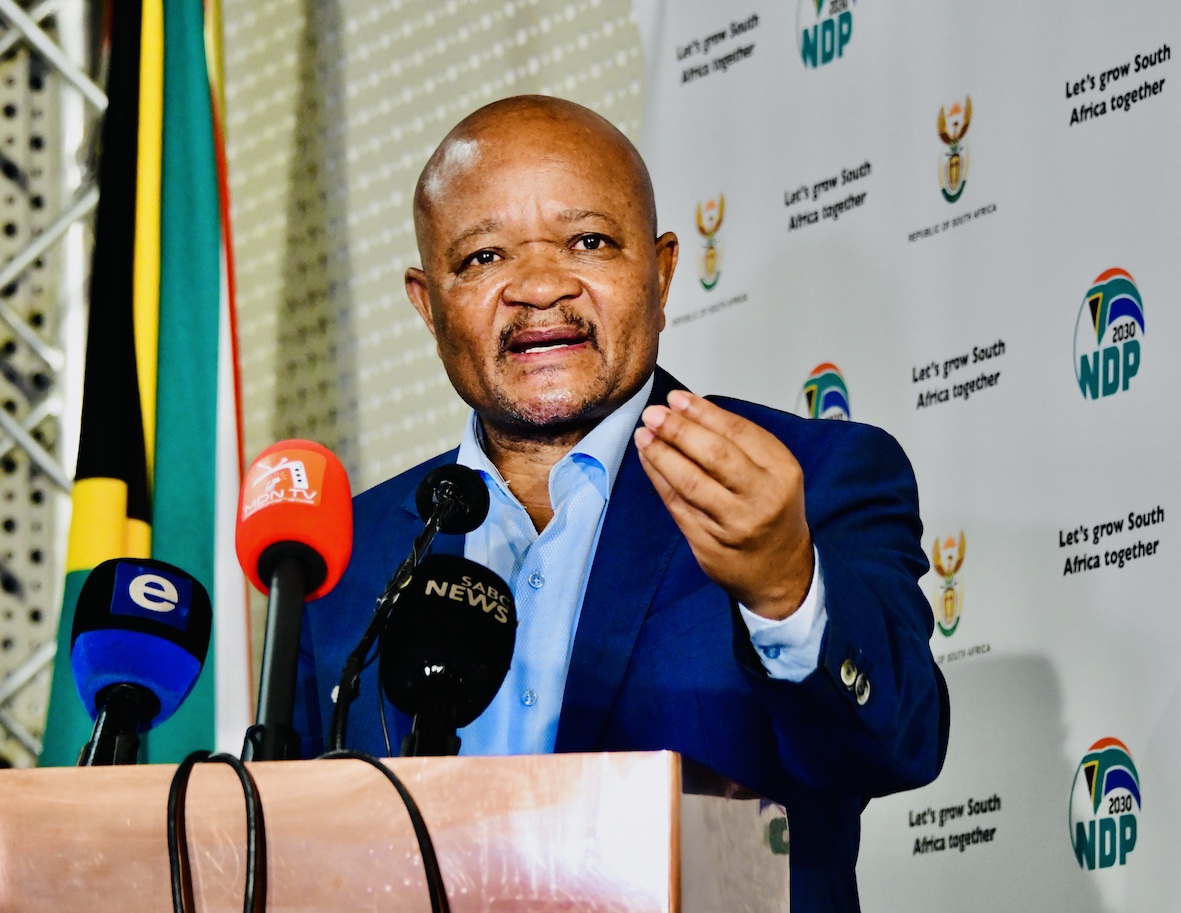
An ad hoc committee of the National Assembly is a temporary parliamentary body established under Rule 253 to investigate a specific matter and report its findings to Parliament. The committee exercises investigative oversight under the Powers, Privileges and Immunities of Parliament and Provincial Legislatures Act. Its findings do not constitute judicial determinations or criminal findings, but can recommend that the National Assembly refer evidence to the National Prosecuting Authority, the Special Investigating Unit, or the Independent Police Investigative Directorate.
If you are concerned about public safety, violent crime syndicates, or unresolved political killings, a parliamentary inquiry that dilutes executive accountability leaves institutional reform stalled in political compromise. When lawmakers fail to substantiate corruption allegations or establish clear boundaries on executive interference, the operational independence of the police service remains unprotected ahead of the municipal elections.
• Will committee chairperson Soviet Lekganyane formally table the final report in Parliament today, or submit a request for an extension to the Speaker?
• What specific reasons will the Speaker require if a further extension is granted past the 11 September deadline?
• Which findings in the final report reflect unanimous committee consensus, and which require formal minority objections from opposition parties?
• Does the final report recommend specific criminal or disciplinary referrals to the National Prosecuting Authority, the Special Investigating Unit, or the Independent Police Investigative Directorate?
• When will President Cyril Ramaphosa act on the ministerial position, with Senzo Mchunu remaining on special leave while the inquiry concludes?