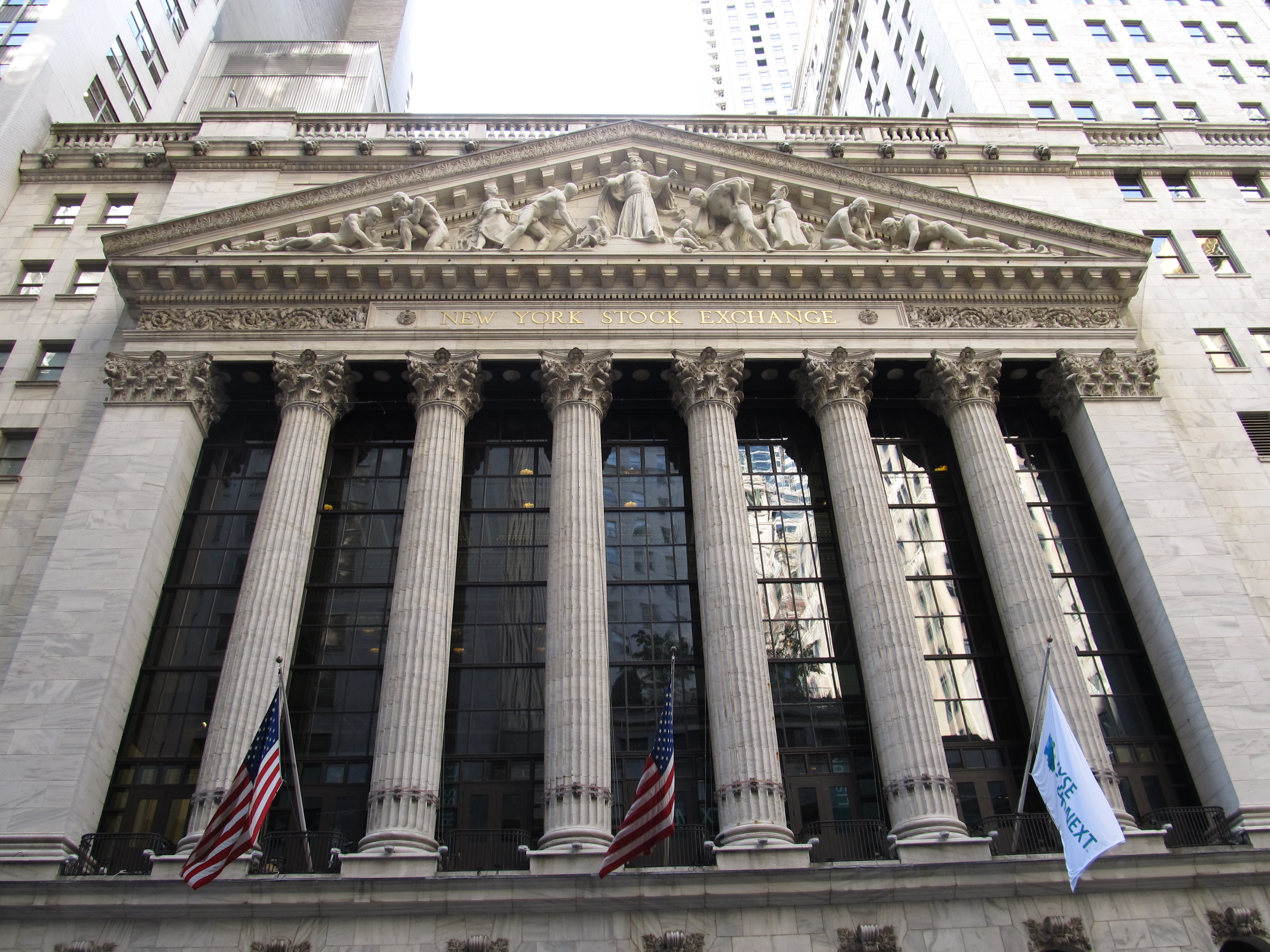
Global asset managers and investment banks led by BlackRock, Citigroup, and Boston Consulting Group have committed balance sheets to real-world asset tokenization, projecting a $16 trillion migration of traditional securities onto blockchain ledgers by 2030. This structural shift strips legacy clearinghouses and correspondent banks of billions in custodial fees while permanently transforming how private capital, corporate treasuries, and sovereign debt circulate across international borders.
The foundational movement began with the digitization of sovereign paper. BlackRock launched its USD Institutional Digital Liquidity Fund, known as BUIDL, on the Ethereum blockchain in partnership with Securitize and BNY Mellon, rapidly crossing $1 billion in assets under management. By backing digital tokens with short-term United States Treasury bills and overnight repurchase agreements, institutional issuers established that high-grade legal collateral can settle instantaneously on public networks while paying daily risk-free dollar yield directly into cryptographic wallets.
While institutional issuers supply the tokenized asset inventory, the decisive catalyst accelerating this multi-trillion-dollar supercycle is the emergence of autonomous artificial intelligence agents. Legacy banking infrastructure is completely incompatible with autonomous software. Under international banking mandates, opening an account requires a living human with certified identity documents, proof of residential address, and physical biometrics. An autonomous neural network or algorithmic agent possesses no legal personhood, cannot sign an affidavit, and cannot pass traditional compliance checks.
Furthermore, traditional payment processors levy a baseline interchange fee of roughly $0.30 plus 2.9% on every transaction, alongside two-day settlement delays and 60-day credit card chargeback windows. If an autonomous agent needs to purchase a fraction of a cent of server compute, an API data stream, or real-time IoT sensor telemetry, a $0.30 merchant fee imposes an overhead penalty exceeding 100,000%. Commercial banks also shutter operations at 17:00 on weekdays and close over weekends, paralyzing autonomous software routines that execute decisions in continuous sub-second computational loops.
Autonomous agents natively require cryptographic rails, programmable stablecoins, and decentralized settlement ledgers. Utilizing account abstraction standards under ERC-4337, software developers equip AI agents with smart contract wallets governed by strict cryptographic session keys and spending limits. Using machine-to-machine payment protocols such as HTTP 402, software agents on high-speed Layer 2 networks like Base and high-throughput chains like Solana stream micropayments measuring fractions of a cent with near-zero latency.
This technological convergence changes the mathematics of global liquidity. Liquidity is not merely the total volume of assets in existence, but the volume of assets multiplied by the velocity of money. Human fund managers make capital allocation decisions across weeks and quarters, leaving trillions in operational corporate treasuries sitting in low-yield commercial checking accounts. Autonomous agent swarms operate continuously. An agent managing corporate supply chains or digital logistics can reallocate excess operating cash into yield-bearing tokenized Treasury bills on a second-by-second basis, sweeping capital into secure collateral the moment an invoice clears and retrieving it microseconds before a disbursement.
For South African institutional allocators and retail investors, this global transition offers direct protection against structural domestic currency depreciation. In October 2022, the Financial Sector Conduct Authority gazetted General Notice 1350, formally classifying crypto assets as financial products under Section 1 of the Financial Advisory and Intermediary Services Act. Through more than 138 licensed Crypto Asset Service Providers operating under institutional oversight, South Africans are increasingly bypassing expensive offshore private banking barriers, using tokenized sovereign notes such as Ondo USDY to secure 4.5% to 5.2% risk-free dollar yields with immediate on-chain liquidity.

Real-World Asset Tokenization is the legal and cryptographic process of converting ownership rights in tangible financial or physical assets into digital tokens on a blockchain. Underlying collateral, including government debt, commercial real estate, or private loans, is ring-fenced inside bankruptcy-remote legal vehicles and held by regulated custodians, while on-chain smart contracts govern compliance, fractional trading, and atomic delivery versus payment without legacy clearinghouse counterparty risk.
If you currently hold digital assets or manage investment portfolios, understanding tokenization separates speculative volatility from institutional capital accumulation. Instead of holding idle cash or speculative tokens subject to market cycles, investors can access high-grade sovereign yields and fractional commercial debt directly from personal digital wallets, bypassing minimum wealth thresholds that previously locked retail capital out of private credit markets.
For builders and technology operators, the immediate opportunity lies in developing autonomous agent workflows and specialized on-chain services. By integrating wallet-enabled agent frameworks into customer operations, data aggregation, or automated logistics, small enterprises can participate directly in the emerging global machine-to-machine economy, billing international clients in hard currency stablecoins without foreign banking friction.
* Will the Financial Sector Conduct Authority introduce a specialized licensing framework for institutional tokenized security registries to allow Johannesburg Stock Exchange listed equities to trade natively on-chain?
* How rapidly will global financial regulators resolve legal personhood frameworks to establish statutory corporate liability for autonomous AI agent economic transactions?
* Can decentralized oracle networks maintain bulletproof proof-of-reserve guarantees during sudden liquidity freezes or corporate defaults in tokenized private debt markets?