
The Department of Home Affairs has disclosed that it spent R463.9 million to detain and deport 37,942 undocumented foreign nationals between 1 January and 31 August 2026. The official expenditure figures, provided in a written parliamentary reply by Minister Leon Schreiber to National Assembly lawmaker Siyabonga Percival Mkhize, reveal that private transport logistics consumed the single largest share of the operational deportation budget.
According to detailed accounting schedules annexed to parliamentary question NW4990, the total expenditure comprises R122.68 million spent on holding facilities and detention administration, and R341.22 million disbursed on cross border repatriation operations. A single road passenger contractor, Atlantis buses, received R232.83 million. That bus contract accounts for more than two thirds of total repatriation spending and more than half of the overall deportation expenditure disclosed for the eight month period.
Four Southern African Development Community neighbours accounted for 37,115 of the 37,942 individuals removed from South Africa. That regional concentration represents ninety eight percent of all recorded deportations. Removals to Zimbabwe led the national tally at 12,407 individuals, followed by Malawi at 10,725, Mozambique at 9,548, and Lesotho at 4,435. The remaining balance of eight hundred and twenty seven deportations was distributed across twenty three other continental and international destinations.
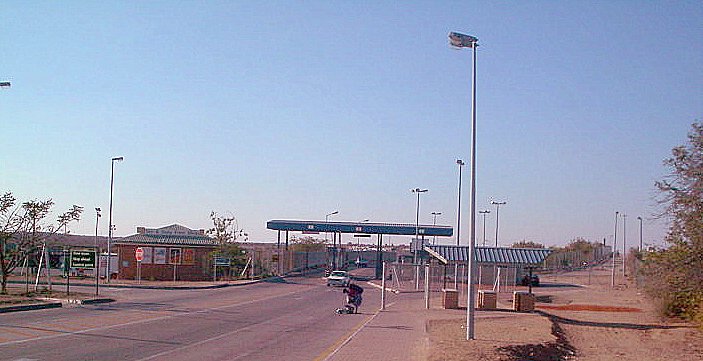
The ministerial accounting reveals a significant concentration of state expenditure. Detention spending surged sharply in April to R45.2 million. The spike coincided with heightened municipal inspection drives across Gauteng and KwaZulu-Natal. Repatriation disbursements escalated heavily from June through August as bus convoys transferred thousands of detainees through the northern logistics corridor toward the Beitbridge and Lebombo border crossings.
The official figures establish that South African immigration enforcement operates as a massive state procurement and logistics pipeline rather than a permanent border barrier.
The parliamentary annex identifies key commercial and public suppliers contracted to execute mass removals. In addition to the R232.83 million disbursed to Atlantis for chartered bus convoys, the Department of Public Works and Infrastructure received transfers for holding infrastructure, including processing facilities at Musina near the Zimbabwean border. Several local municipalities received reimbursements for ground transport, while private aviation charter company Cobra Aviation received payments for long haul deportations to non contiguous African countries.
The operational footprint relied heavily on designated detention nodes. The Lindela Repatriation Centre in Krugersdorp served as the primary transit hub for inland transfers, while regional holding facilities in Limpopo, Mpumalanga, and KwaZulu-Natal handled cross border convoys. Operational reports indicate that daily detention tariffs, private security guarding, and medical processing contributed significantly to the R122.68 million detention total.
Minister Schreiber introduced a critical qualification to the disclosed headcount. The minister noted that the 37,942 figure reflects only individuals processed, detained, and deported directly by the Department of Home Affairs Immigration Inspectorate under Section 34 of the Immigration Act 13 of 2002. It explicitly excludes undocumented individuals arrested or processed independently by the South African Police Service. The minister also noted that vast numbers of individuals processed for voluntary repatriation or administrative departure sit outside the formal deportation count.
The scale of the expenditure has created acute friction inside government. The Immigration Inspectorate has exceeded its baseline operational budget. The department submitted an urgent bid to National Treasury for R292 million in unforeseen and unavoidable expenditure under Section 16 of the Public Finance Management Act 1 of 1999. Treasury has not publicly confirmed whether it will approve the supplementary allocation or compel Home Affairs to absorb the shortfall by cutting internal civil registration services.
The parliamentary data exposes the economic reality of regional migrant labour. The four nations dominating the deportation tables represent historical labour corridors that supply agriculture, construction, hospitality, and domestic work across South African provinces. Without statutory bilateral agreements that regularize seasonal and low skill employment, mass busing operations risk functioning as a revolving door where individuals deported across the Limpopo River return within weeks to existing jobs in South African urban centres.
The disclosure also raises diplomatic and financial questions within the regional bloc. The ministerial reply does not record any financial recovery from sending states. Under current arrangements, South African taxpayers absorb the full costs of custody, biometric registration, medical screening, meals, and international coach transport to neighbouring border posts.

The parliamentary Portfolio Committee on Home Affairs has signaled that it will interrogate the contract terms, procurement compliance, and performance metrics of the private transport suppliers when Parliament reviews the mid term budget adjustments in October. Lawmakers intend to summon Director General Tommy Makhode and departmental finance executives to determine whether competitive bidding rules were maintained during emergency bus charters and whether automated digital visa systems could achieve greater compliance at a fraction of the detention cost.
* Public Resource Allocation: The R463.9 million spent on eight months of deportations draws directly from the national revenue pool. Every rand allocated to emergency transport overruns reduces funds available for modernizing district Home Affairs offices, clearing identity document backlogs, or upgrading municipal civic infrastructure.
* Regional Border Operations: Commuters, freight logistics operators, and border community residents around Musina, Beitbridge, and Komatipoort should anticipate continued law enforcement checkpoints and heavy bus convoy traffic along the N1 and N4 arterial highways.
* Employer Compliance Audits: As Home Affairs attempts to manage its budgetary shortfall, the Immigration Inspectorate is redirecting resources toward workplace inspections. Businesses in commercial farming, hospitality, and construction face increased audits to verify employee work authorization documents.
* Policy Uncertainty: The absence of a settled Treasury allocation means immigration enforcement operations could experience sudden slowdowns if private transport contractors face payment delays toward the end of the financial year.
* Did the Department of Home Affairs follow competitive public tender processes under the Public Finance Management Act before allocating R232.8 million to a single bus contractor?
* What statutory mechanisms is the South African government pursuing to recover detention and repatriation costs from regional sending nations under SADC protocols?
* How many of the 37,942 individuals deported between January and August have already re entered South Africa due to porous border line fencing?
* Will National Treasury grant the R292 million emergency bailout for unforeseen expenditure, or will Home Affairs be forced to freeze vacancies and frontline public services?