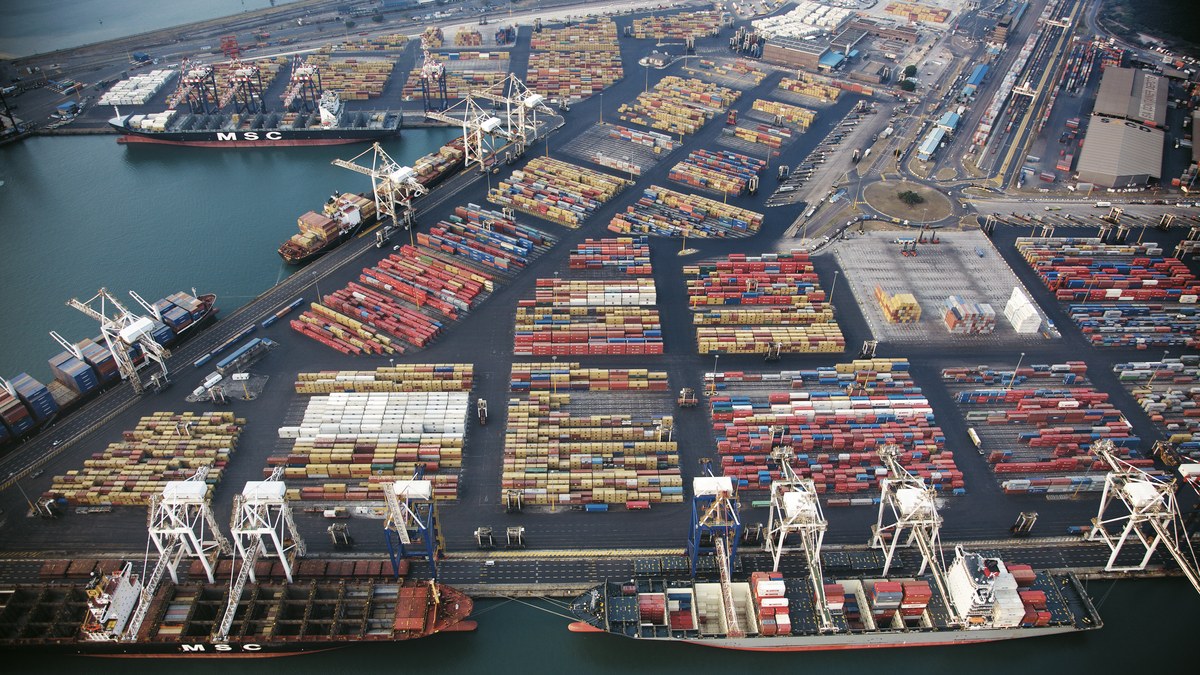
A massive wave of Chinese manufactured imports is entering South African ports at the direct expense of domestic industrial producers. Official trade figures show Chinese shipments to South Africa expanded twenty-nine percent between January and August 2026, while domestic factory output fell 4.3 percent year-on-year in August.
The divergent trends expose the severe structural vulnerability of South Africa's manufacturing heartland. Data compiled from the South African Reserve Bank and customs authorities show that while Pretoria exports raw unbeneficiated minerals such as iron ore, chrome, and manganese to Asian smelters, it imports finished industrial machinery, electronics, automotive components, and textiles back into the local economy.
A diagnostic sovereign risk assessment by Moody's Ratings warns that South Africa is the most vulnerable of eight major African economies to Chinese export displacement. The ratings agency highlighted that South Africa combines high trade openness with an established domestic manufacturing base that directly competes with subsidized Chinese production lines.
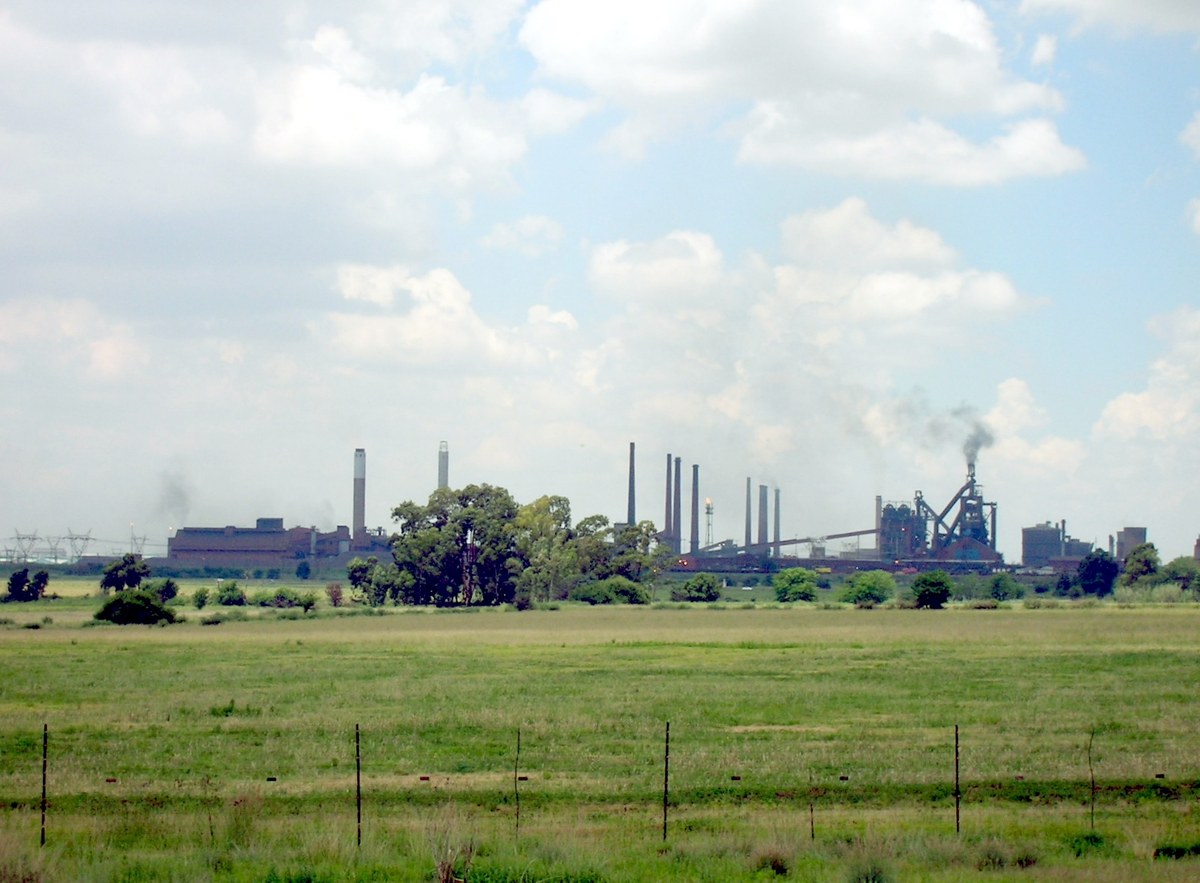
The fallout is already visible across heavy industry. In the Vaal industrial basin, primary steel manufacturing operations face intense pressure from imported commercial alloys. ArcelorMittal South Africa has repeatedly warned that unchecked steel imports undermine the viability of long steel operations in Newcastle and flat steel mills in Vanderbijlpark. This pricing squeeze threatens thousands of high-skilled industrial jobs.
The competitive pressure directly undermines the Department of Trade, Industry and Competition's localization master plans. While government policy mandates local procurement for state infrastructure projects, private commercial buyers and municipal contractors routinely purchase imported electrical equipment, solar panels, and hardware due to pricing discounts that local foundries cannot match.
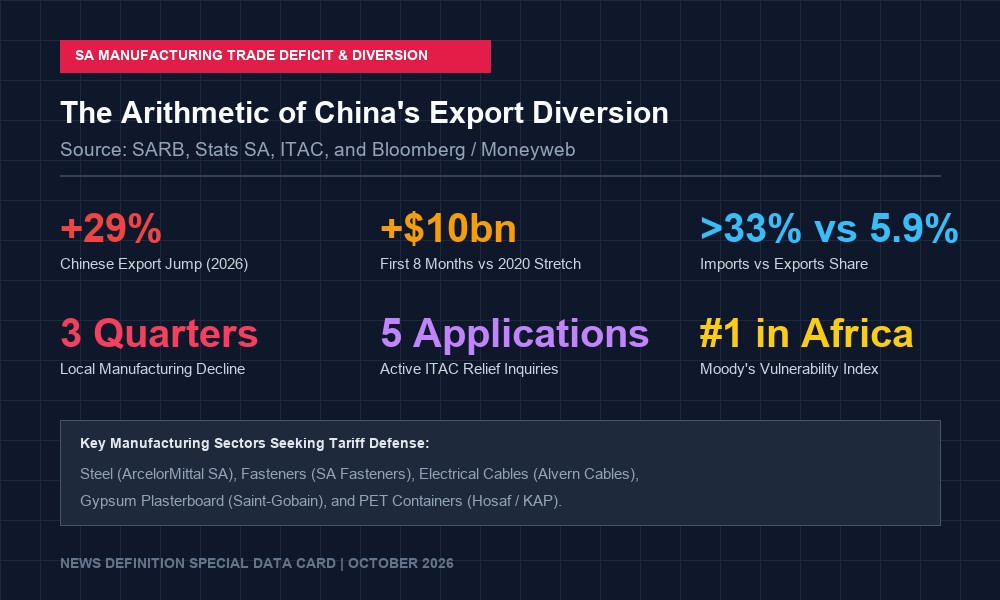
Industry bodies are lodging trade remedy applications with the International Trade Administration Commission. Manufacturers seek reciprocal anti-dumping tariffs and stricter port-of-entry verification to halt the loss of domestic productive capacity.
Trade displacement occurs when a rapid surge of lower-priced foreign imports captures domestic market share. This process forces local manufacturers to reduce output, cut operating shifts, or decommission production plants.
Under the International Trade Administration Act 71 of 2002, the International Trade Administration Commission possesses statutory authority to investigate unfair trade practices, recommend customs tariff amendments, and impose anti-dumping duties on subsidized foreign imports.
When an industrial economy relies on raw mineral exports while importing finished capital and consumer goods, it remains locked in a colonial trade pattern. The economy loses domestic value addition, technical skills, and tax revenue to foreign manufacturing hubs.
Factory workers and technicians across Gauteng, KwaZulu-Natal, and the Eastern Cape face growing threats to employment security. Reduced industrial output increases the immediate risk of short-time work, wage freezes, and retrenchments.
Local consumers and contractors enjoy cheaper prices for imported tools, construction materials, and electronics. However, the resulting closure of domestic factories permanently erodes formal employment and municipal property rates in industrial towns.
For national taxpayers, the contraction of domestic manufacturing shrinks corporate tax collections. The revenue loss limits the ability of the state to fund critical infrastructure and public healthcare programs.
* Will the International Trade Administration Commission expedite anti-dumping investigations into subsidized foreign manufactured goods before local steel and machinery producers close their doors?
* How will the Department of Trade, Industry and Competition reconcile bilateral diplomatic commitments within BRICS with urgent domestic demands for industrial protection?
* Can domestic manufacturers cut input electricity and rail logistics costs quickly enough to compete against foreign import prices without permanent tariff walls?