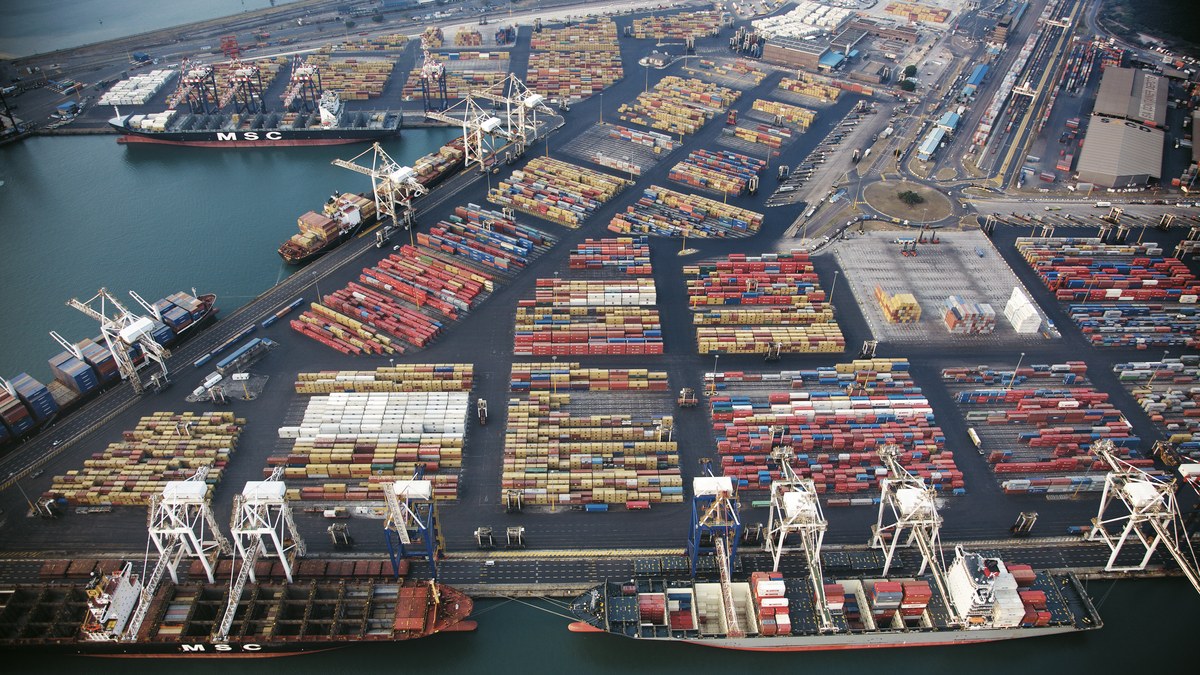
Chinese shipments to South Africa jumped 29 percent in the first eight months of 2026 compared with the same period a year earlier. The increase forms part of a prolonged structural shift: Chinese exports have more than doubled since the start of the decade and added almost $10 billion in the first eight months of this year versus the corresponding stretch six years ago. Among major African economies, only Nigeria recorded a larger dollar influx.
The timing tracks the intensification of United States trade barriers. Facing elevated tariffs across American ports, Chinese industrial producers have redirected excess capacity into open developing economies. South Africa already runs a deep trade deficit with Beijing: China supplies more than a third of South Africa's manufactured imports but absorbs only 5.9 percent of South African exports based on South African Reserve Bank trade data.
The surge lands on an already struggling domestic manufacturing sector. Factory output contracted for a third consecutive quarter in the three months through June. Capacity utilisation across local industrial plants sits near 76 percent, far below levels required to sustain capital expansion or defend workforce headcount.
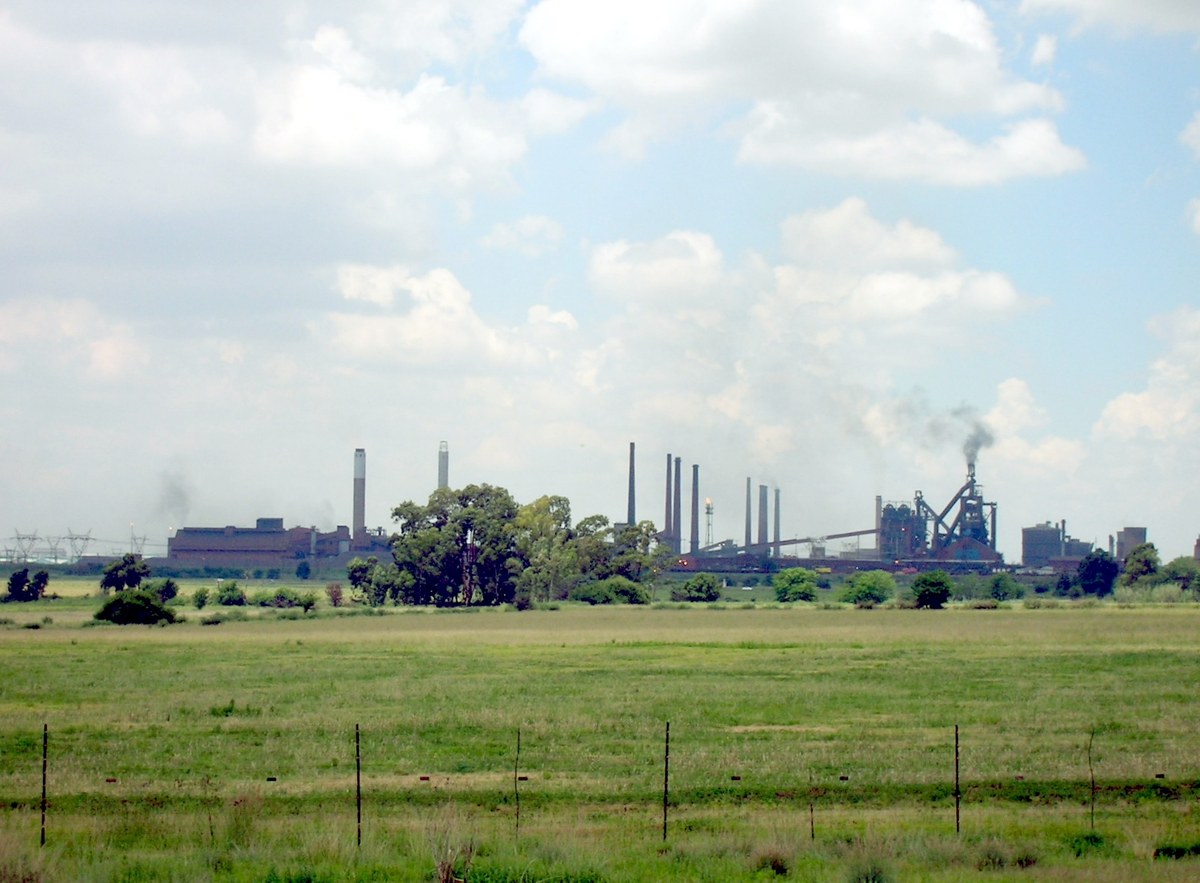
The International Trade Administration Commission of South Africa confirmed that trade defence applications have mounted significantly. ITAC is currently investigating five separate petitions for tariff relief and anti-dumping protection across key industrial product lines. The contested goods include cold-rolled steel, gypsum plasterboard, polyethylene terephthalate containers, industrial fasteners, and electrical cables.
Major domestic manufacturers have petitioned the commission for immediate tariff interventions. The applicants include ArcelorMittal South Africa, Saint-Gobain Construction Products, polymer producer Hosaf, and the South African Fasteners Manufacturers Association. At wire and cable producer Alvern Cables in Germiston, management previously placed shop-floor workers on reduced time as cheaper imported alternatives undercut order books.
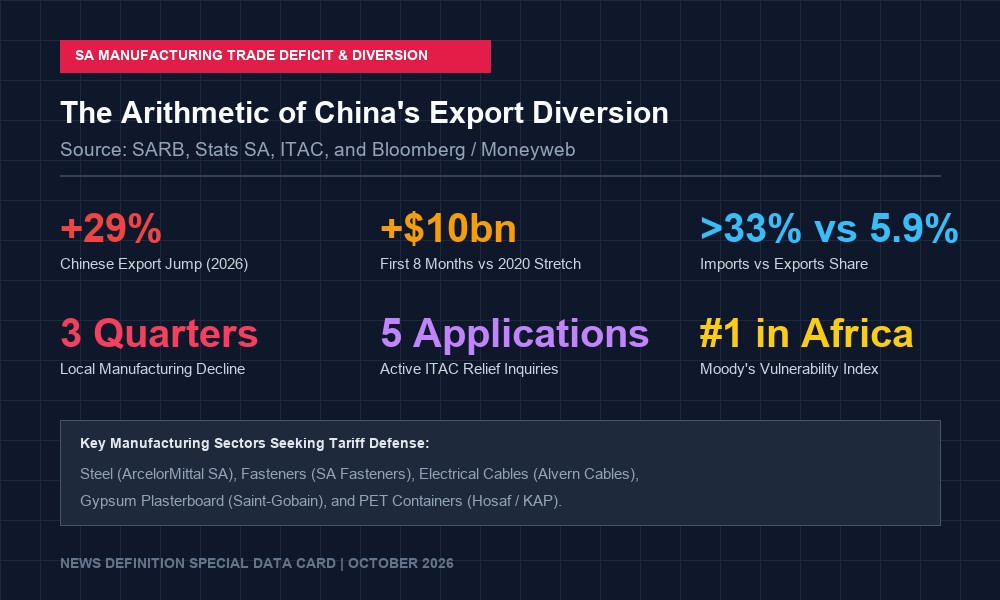
Moody's Manufacturing Vulnerability Index ranks South Africa as the most exposed among eight African nations assessed. The rating agency highlighted South Africa's large industrial asset base, its heavy reliance on foreign value-added inputs, and persistent domestic infrastructure bottlenecks that erode cost competitiveness.
Business Leadership South Africa chief executive Busi Mavuso observed that government still lacks an integrated trade strategy. Organised business argues that state policy continues to prioritise diplomatic alignment over domestic economic viability, even as trade officials champion beneficiation. Department of Trade, Industry and Competition acting deputy director-general Maoto Molefane described the global trade disruption as a serious wake-up call. Molefane pointed to an official butterfly strategy that aims to expand export access into alternative African and Asian corridors.
Trade diversion occurs when tariff barriers in large consumer economies cause exporting manufacturers to redirect surplus goods to third-party markets at discounted prices. China now accounts for more than one-third of all manufactured goods entering South Africa, while taking back mostly unprocessed raw minerals. When domestic production costs face port delays, rail disruptions, and municipal power instability, local factories cannot match the unit prices of subsidised East Asian production runs.
In the short term, imported hardware, electrical wiring, plastic packaging, and building supplies hold down retail shelf prices for consumers and commercial contractors. In the medium term, this price undercut starves local manufacturing plants of the cash flow needed to pay shift wages. If local plants close product lines or reduce shifts, technical industrial jobs disappear permanently, and domestic supply chains become wholly dependent on foreign maritime logistics.
* Can ITAC finalize and implement tariff relief measures on the five active petitions before domestic plants implement further shift reductions?
* Does the department butterfly strategy possess concrete logistics capacity to turn mineral exports into beneficiated manufactured exports?
* How will local manufacturers defend plant viability if United States trade restrictions expand and divert additional finished goods into African ports?