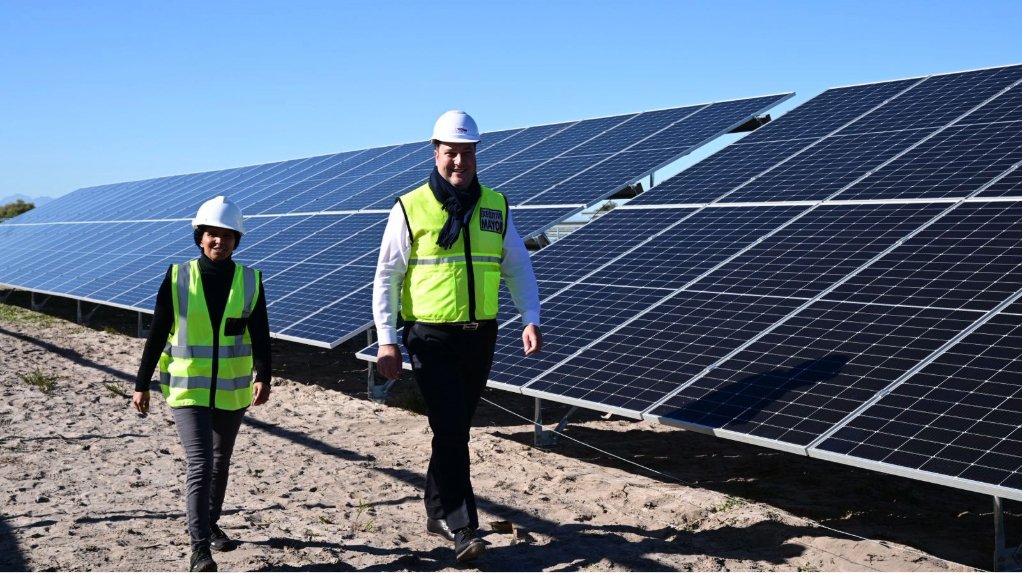
Cape Town stopped waiting for Eskom’s next tariff paper.
On 31 August the City signed two 20-year power purchase agreements for 70 MW of independent solar. JEMPEC supplies 30 MW into the grid at Atlantis. Make a Difference LLC supplies 40 MW at Philippi. Mayor Geordin Hill-Lewis called it the first time a South African metro has bought open-market power to cut Eskom reliance.
The City’s own arithmetic: 19–21% cheaper than current Eskom rates. Annual increases follow the Consumer Price Index, not the utility’s regulated path. Over 20 years the two contracts are expected to buy about R8 billion of electricity, and that spend is required to stay below Eskom rates for the full term.
This is not a rooftop brochure. It is a municipal offtake sitting next to Eskom’s week-old results: profit up, sales down, municipal arrears still climbing.
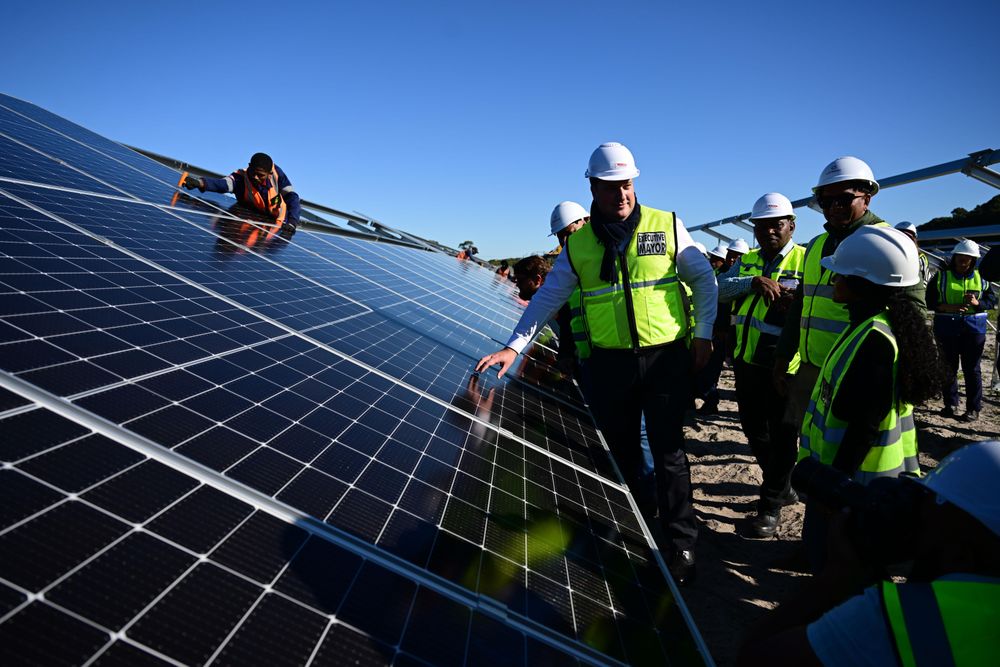
Hill-Lewis: families cannot be expected to absorb endless Eskom increases. Energy MMC Xanthea Limberg added the climate line the City wants on the slide — nearly two million tonnes of carbon avoided, credits the City says it can trade. Treat that as the City’s claim until a register shows the tonnes.
Cape Town already wheels energy across its grid and runs its own 7 MW solar plus 10 MWh of storage in Atlantis. These PPAs sit inside a tender for up to 200 MW, with a longer political target of 700 MW of independent power. Connection dates for first megawatts have not been published. Do not invent a switch-on month.
Eskom is not a party to these contracts. It still sells the rest of the City’s bulk. Volume that leaves the Eskom meter is volume that does not help municipal arrears on the national book.
Two signed 20-year solar PPAs, 70 MW, priced below today’s Eskom tariff and indexed to inflation. First metro in the country to lock that structure. It is a procurement fact, not a national generation fix.
If you pay a Cape Town bill, the City has bought a slice of power that is not chained to the next Eskom hike. The rest of the bill still is. If you live in another metro, you now have a template and a competitiveness problem. If you are Eskom, a paying customer just signed a 20-year exit ramp for 70 MW and said 700 is the destination.
* When does first power actually hit the City grid?
* Do Joburg, eThekwini or Tshwane copy the CPI lock this year, or stay inside the arrears loop?
* And if an independent plant under-delivers, who eats the shortfall the producer, the City, or the household still on the Eskom remainder?